Author: John Grennan | Published: January 22, 2026
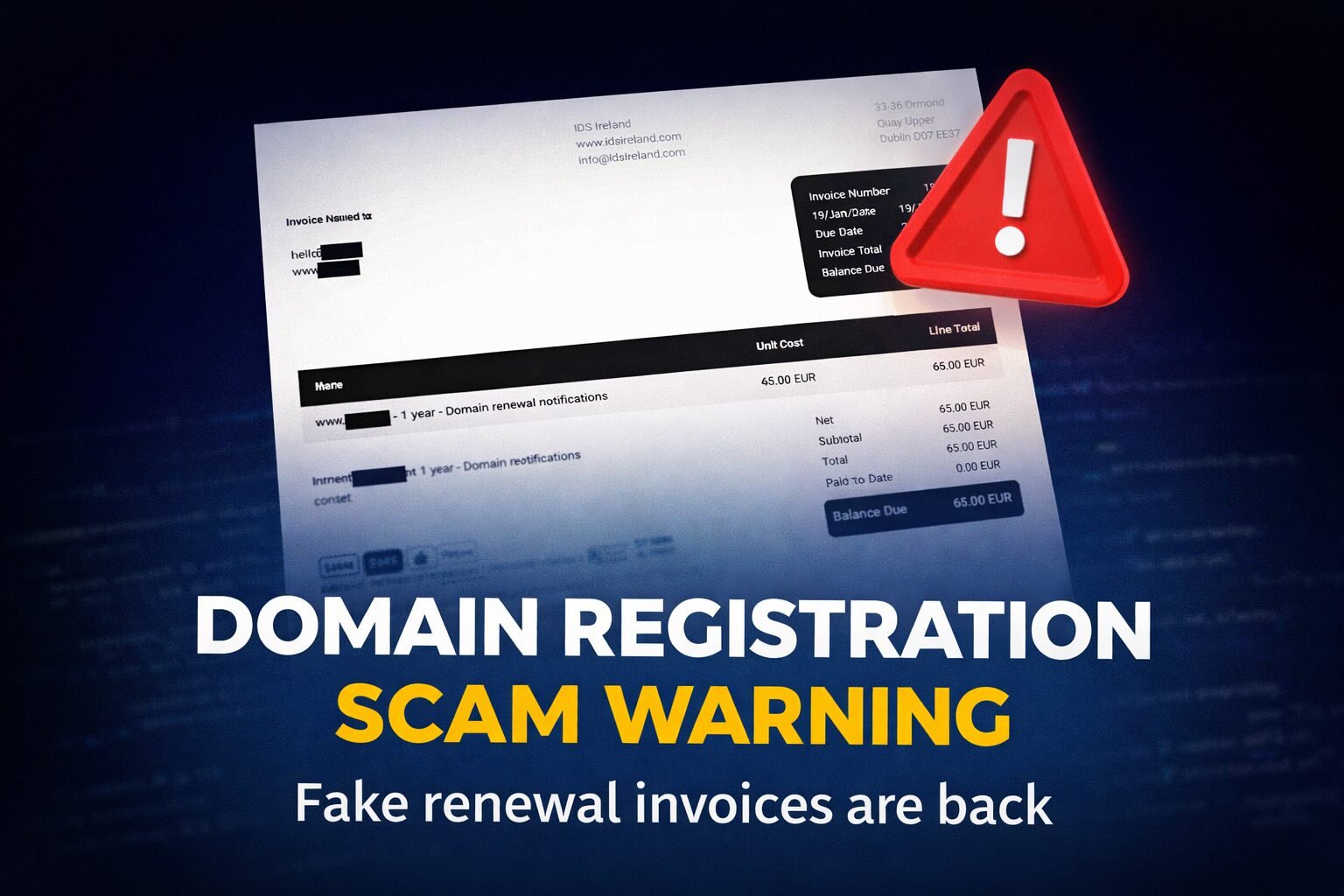
Security AlertDomain Registration Scam Warning. Fake Renewal Invoices Are Back
Domain registration scams are not new. But they are getting more polished, more convincing, and more likely to catch busy businesses off guard.
We were recently sent the invoice below by a client who wanted to double-check if it was legitimate. At first glance, it looks professional. It includes a domain name, an invoice number, payment terms, and even Apple Pay as an option.
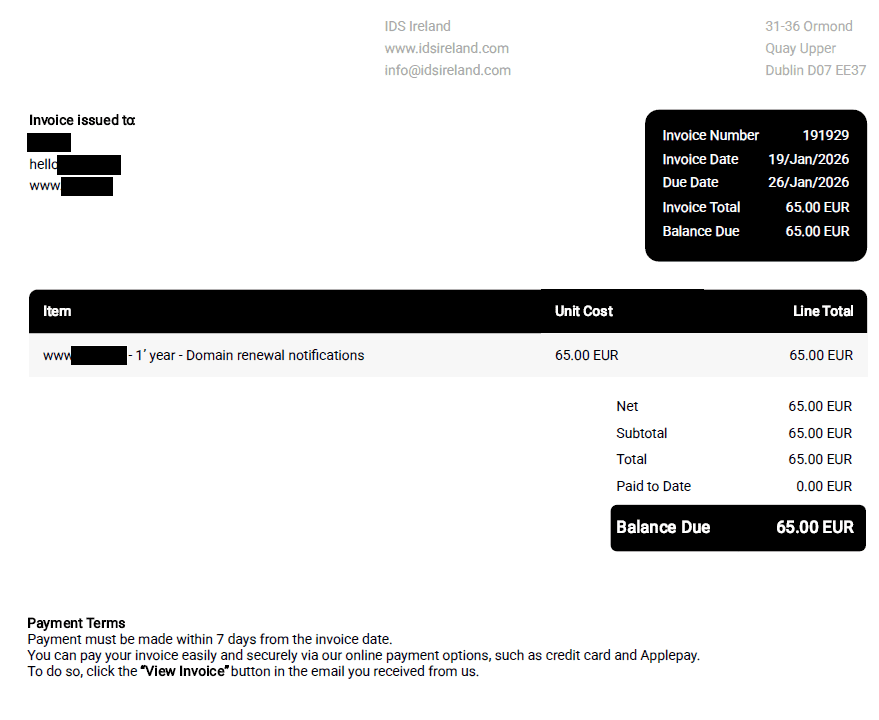
It is not legitimate.
This is a modern version of a scam we first warned about back in 2019. Unfortunately, it is still doing the rounds today.
What This Scam Looks Like in 2026
The invoice claims to be for:
- A one-year domain renewal or “domain renewal notifications”
- A relatively small amount, typically €50–€90
- A short payment window to create urgency
The sender often presents themselves as a domain authority or registry. In this case, the invoice was branded as IDS Ireland.
That name sounds official. It is designed to.
Crucially, they are not your domain registrar.
Why These Invoices Catch People Out
This scam works because it exploits a few very human behaviours:
- The amount is small enough to avoid scrutiny
- The domain name on the invoice is real
- The language feels administrative rather than threatening
- Finance teams are conditioned to pay renewal invoices quickly
There is no malware. No obvious malicious links. No obvious spelling mistakes. Just a quiet assumption that “someone else must have asked for this”.
The Biggest Red Flag to Look For
Here is the key thing to remember:
Your domain can only be renewed through the registrar you originally purchased it from.
If you did not register your domain with the company sending the invoice, they cannot renew it for you. No exceptions.
Scammers rely on the fact that many businesses do not know who their registrar actually is. They also know that domain renewals feel routine and boring, which lowers people’s guard.
Common Tactics Used in Domain Invoice Scams
You will often see one or more of the following:
- Vague line items like “domain renewal notification”
- No mention of your actual registrar
- Generic support email addresses
- Pressure to pay within 7 days
- Payment links that bypass your normal renewal process
Some versions also include wording that implies your domain could expire, without explicitly stating it. This is deliberate.
What To Do If You Receive One of These Invoices
If an invoice like this lands in your inbox, follow these steps:
- Do not pay it
- Check where your domain is actually registered (e.g., use a WHOIS lookup)
- Contact your IT provider or domain registrar to confirm
- Flag it internally so others do not fall for the same thing
- Mark the sender as spam
Already paid? If you have already paid one of these invoices, contact your bank immediately. The sooner it is reported, the better the chance of recovery.
If you are unsure about any renewal invoice. Domain related or otherwise. It is always worth asking the question before paying.